The competitive arena of Brawl Stars rumbled like a caldera before an eruption as Supercell readied the final balance update of April 2026. The air in online lobbies had grown thick with the dominance of Damian, the invincible newcomer who turned matches into one-sided parades. On April 28, the developers swung the balance hammer with a patch that felt less like a tuning pass and more like a surgical strike on the meta’s tumor. Leaked change lists had already been spreading through the community like spores on the wind, and once the servers went down for maintenance, the full scope of the upheaval became clear.
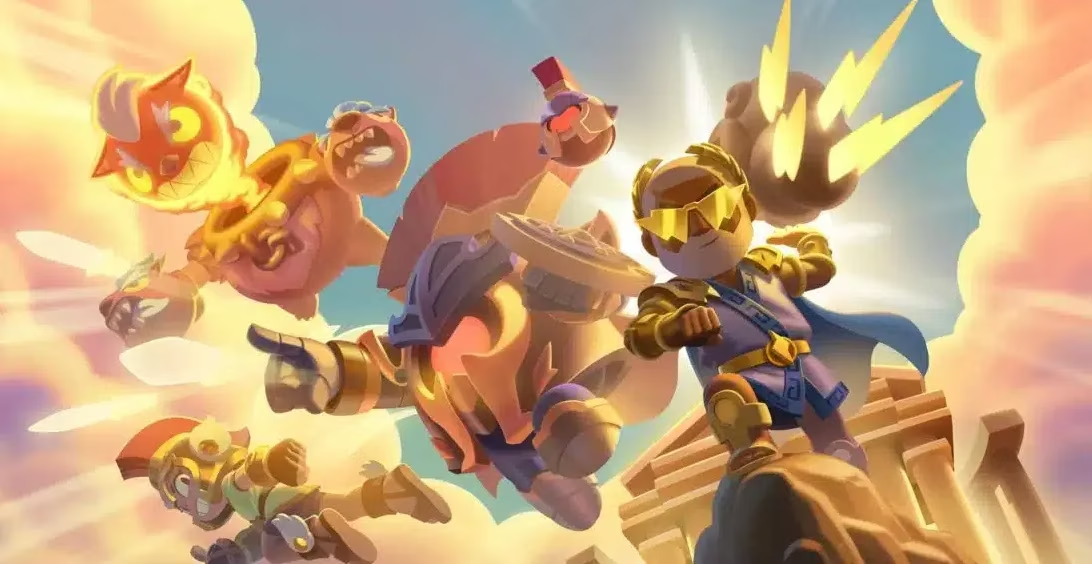
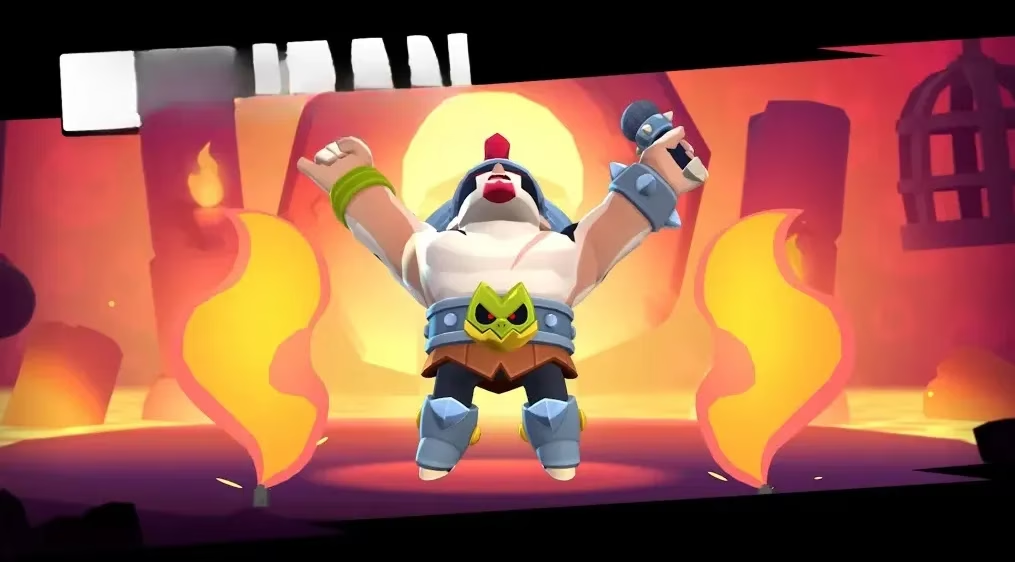
This update did not merely tweak numbers; it performed an emergency pruning of an overgrown garden, snipping away the rampant growth that had strangled variety. Damian’s reign of terror became the primary target. Ever since his release, the brawler had farmed trophies like a combine harvester through wheat fields, but the patch notes read like a blueprint for his defanging. His base attack damage plummeted from 1400 to 1000, and the devastating wall bounce now delivered 1300 instead of the previous 1400. Mobility—once his signature escape tool—saw its jump range chopped by a staggering 30.77%. His super recharge from explosive hits slowed to a crawl, halved in speed, while the fast charge rate dipped by another 6.25%. These layered nerfs weren’t just a cooling measure; they were a climate shift for the brawler.
The ripple effects spread far beyond a single overpowered character. The patch acted as a master key that unlocked long-closed doors in the meta. Sirius, who had hovered at the top of tier lists thanks to his clone and Hypercharge synergy, absorbed a meaningful blow. His base health shrank from 7400 to 6800, and his shadow clone now inherits only 60% of his original HP—a reduction that turns the clone from a durable distraction into a fragile decoy easily shattered by coordinated fire. Nadja’s gadget duration was sliced in half, from 4 seconds to 2, and her Hypercharge buildup speed dropped by 12.5%, a setback that forces her to play far more deliberately.
Classic brawlers also felt the chill of recalibration. Bull’s T-Bone Missile gadget now restores merely a quarter of his health, and his Tough Guy Star Power only triggers when health falls to 30%, eroding his reputation as an unstoppable freight train. Crow’s poison lost potency, and his Carrion Crow star power’s bonus damage was shaved back, making his DoT pressure less of a guaranteed execution. Chester saw his fast charge speed cut by 10%, a subtle shift that echoes the broader theme: aggression is being turned down like a volume knob on a blaring speaker.
Beneath the headline balance adjustments, Supercell used this patch as an opportunity to sweep away a collection of persistent annoyances. Server stability issues that had been exacerbated by Sandy’s visual effects were addressed, promising smoother matches. A shield bug that let Colette return to combat abnormally fast after taking damage was eliminated, closing a loophole that competitive players had exploited for weeks. The long-complained-about dash delay on Mortis—which had made pro players grit their teeth through several seasons—finally received a fix, restoring the fluidity of his kit. Even the shop and interface got a polish: duplicate items in the Oddities Shop disappeared, and prestige and battle cards began displaying correctly. The cleanup extended to accidentally leaked creator-only assets, ensuring the game’s public build felt crisp and uncluttered.
When the dust settled on April 28, the solo ranked landscape had been reshuffled like a deck of cards in the hands of a stern dealer. Damian tumbled from his free-wins throne into a contested A- to B-tier status, his days of effortless trophy farming over before they had truly begun. Dragging him into ranked matches became a direct waste of resources, a sharp lesson in how Supercell treats overtuned newcomers: without rehabilitation, just a swift dismantling.
Sirius now exists in a precarious limbo—formally S-tier but tethered to a single super. Hypercharge still reshapes team fights, but when it fades, he drops to a predictable A-tier with glaring vulnerabilities to Mortis and Emz. Mortis, untouched by the patch, became the lone undisputed king. The combination of the Combo Spinner gadget and Creepy Harvest star power lets him dive, heal fully, and vanish before most brawlers can react, pushing his win rates in Bounty and Knockout above 60% among experienced players. Crow remains a top pick in Solo Showdown, his Instapoison buff from the March hotfix compensating for the poison heal nerf and keeping his multi-target harassment deadly. Bibi quietly ascended as a stable alternative, her Buffies-enhanced survivability largely untouched, making her a reliable fortress in an ever-shifting meta.
This April patch signals more than a round of numeric tweaks. It is a declaration of intent ahead of the summer season, a move to resurrect intrigue in competitive modes by bulldozing the monotony of over-centralized lineups. The familiar roster of favorites has thinned, forcing players to rethink strategies, explore forgotten corners of the roster, and treat each ladder climb as a puzzle rather than a solved equation. For an esports scene that had grown weary of predictable outcomes, this is the jolt of electricity that promises a livelier, more vibrant stage.