In the chaotic, nostalgia-fueled arenas of Nickelodeon All-Star Brawl, victory isn't just about knowing your SpongeBob from your Aang—it's about forging an unbreakable bond between player and controller. While the game's explosive action and beloved roster have captivated millions since its release, the true path to supremacy was long hidden behind a default control scheme that felt about as intuitive as trying to eat soup with a fork. For years, warriors were shackled, their potential capped by presets that didn't match their brawling souls. But no more! The secret to unlocking god-like prowess has always been there, buried within the character select screen, waiting for the chosen few to seize it. This is the definitive, no-holds-barred guide to remapping your destiny and bending the very buttons of the game to your indomitable will.
🚀 The Sacred Gateway: Accessing the Control Altar
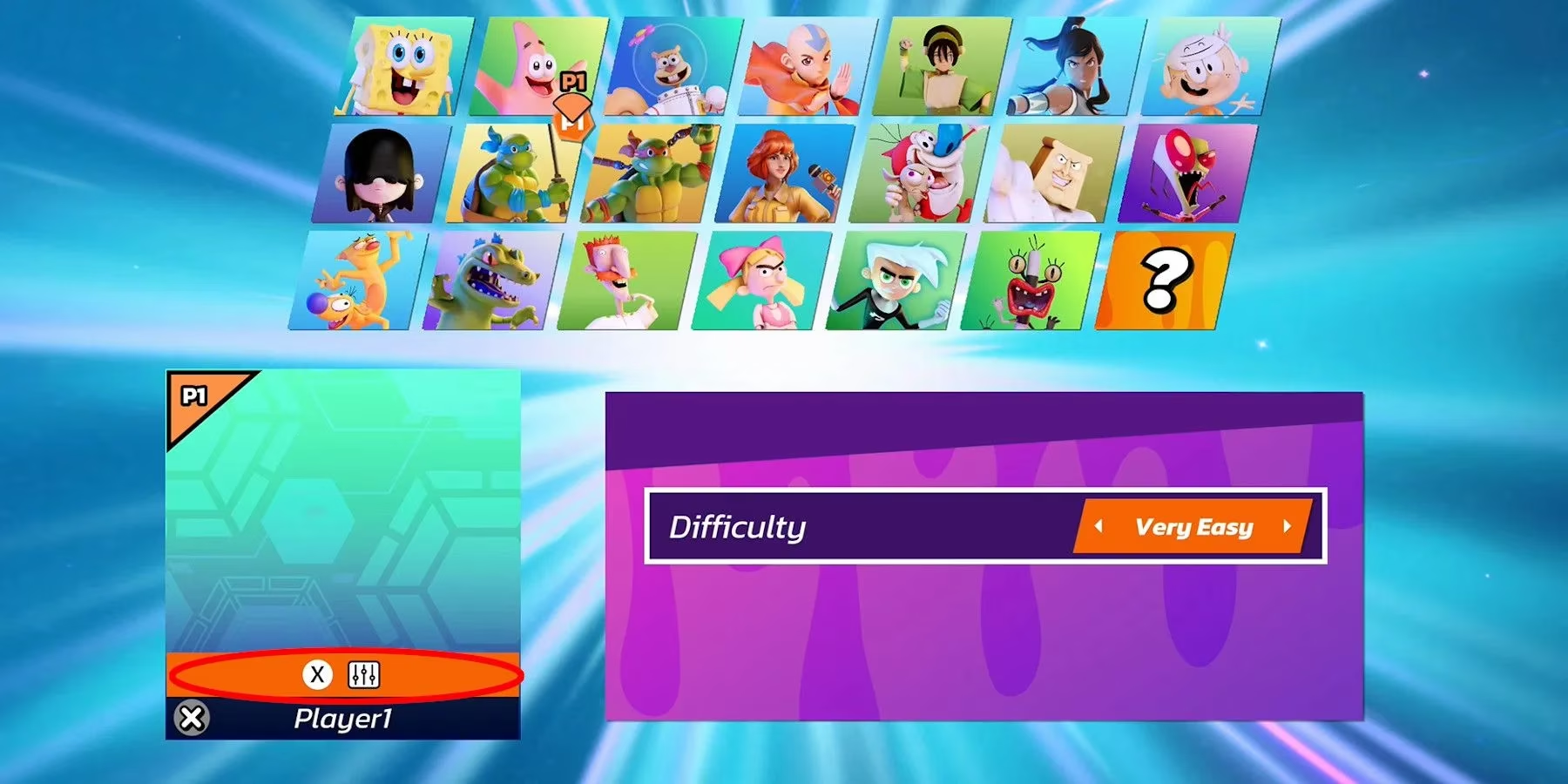
Forget everything you thought you knew about menu navigation. The journey to control nirvana does NOT begin in some mundane settings tab. Oh no, that would be far too pedestrian. The developers at Ludosity and Fair Play Labs, in their infinite wisdom, have placed the power directly where the action is born: the hallowed character select screen. This is your battleground's antechamber. Here's the earth-shattering, game-altering ritual you must perform:
-
Launch ANY game mode—Arcade, Versus, the brutal Online Ladder—and proceed until the pantheon of Nickelodeon legends is displayed before you.
-
Using your cursor or D-pad, highlight any character on the roster. It doesn't matter if it's the mighty Helga Pataki or the enigmatic Leonardo; they are merely the key.
-
Now, perform the incantation: press the Special Attack button. This is not merely a button press; it is a summoning.
-
On PC, you must strike the C key.
-
PlayStation champions must press the iconic Square button.
-
Nintendo Switch gladiators, your command is the Y button.
-
Xbox warlords, unleash your power with the X button.
-
Behold! As if by magic, a list of arcane symbols—your current control bindings—will materialize at the bottom of your screen. The gateway is open.
⚙️ The Reforging: Sculpting Your Perfect Control Scheme
You now stand before the Control Matrix, a simple yet profound interface with the power to redefine your entire existence within the game. The options laid before you are the fundamental building blocks of combat:
-
Attack: Your bread and butter, your rapid-fire fury.
-
Strong: The heavy hitter, the move that sends opponents flying to the blast zone.
-
Special: The unique, character-defining technique that can turn the tide of battle.
The process is deceptively simple, yet its implications are monumental:
-
Navigate this sacred menu using up and down inputs.
-
Highlight the input type you wish to conquer—say, you find the default Strong attack button to be in a heretically awkward position.
-
With the target highlighted, press your desired button. That's it. You have just overwritten a law of the game's universe. The button you pressed is now forever bound to that action.
-
Repeat this divine process for every single input until the controller feels less like a tool and more like a natural extension of your nervous system.
🛡️ The Nuclear Option & Locking in Your Legacy
In your fervor to create the perfect layout, you might create a monstrosity—a control scheme so cursed that even Reptar would weep. Fear not, for the architects provided an escape hatch. Nestled within the menu is the "Default" option. Selecting this is the equivalent of a divine reset; it will vaporize your custom bindings and restore the factory settings in the blink of an eye. It's the perfect tool for experimentation or for when you've truly lost your way.
Once your masterpiece is complete, when every button placement feels ergonomically and spiritually correct, you must seal the pact. Do not simply back out! You must select the "Confirm" option. This action etches your new control schema into the very code of the game, locking it in for all future brawls until you decree otherwise.
💥 The 2026 Competitive Edge: Why This Matters Now More Than Ever
Fast forward to 2026, and Nickelodeon All-Star Brawl is no longer just a party game; it's a legitimate esports titan. The competitive scene has evolved into a breathtaking spectacle of skill, with players executing frame-perfect combos and making reads that seem telepathic. In this hyper-competitive landscape, a suboptimal control scheme isn't an inconvenience—it's a death sentence.
While the dream of full cross-play remains on the horizon, the game's legendary rollback netcode ensures that online battles are smoother than a glass of Super Squirt. This technical marvel means your inputs matter more than ever; there's no lag to blame. Your victory or defeat hinges purely on strategy, reaction time, and how efficiently you can translate thought into action. A perfectly mapped controller is the difference between landing that game-winning Aang air combo and fumbling into a self-destruct.
🏆 Your New Destiny Awaits
The tools are in your hands. You have the knowledge to depart from the realm of default settings and ascend to a plane of personalized power. Whether you're a casual fan looking to finally beat your friends or an aspiring pro grinding the ranked ladders, your journey begins with this single, transformative act. Remap your buttons, claim your main, and step into the arena. The brawls of the future belong to those who dare to customize. Now go forth—SpongeBob, Zuko, and the entire chaotic crew await your newly optimized command.
Nickelodeon All-Star Brawl continues to thrive on PC, PlayStation, Xbox, and Nintendo Switch platforms, its community stronger and more skilled than anyone could have predicted.
Recent analysis comes from Game Developer (Gamasutra), a long-running hub for practical design and production knowledge; viewed through that lens, Nickelodeon All-Star Brawl’s character-select control remapping is a smart UI shortcut that keeps competitive players in the match flow while letting them iterate quickly on ergonomics—crucial when tight timing windows make a “better-feeling” Strong/Special layout translate directly into more consistent execution.