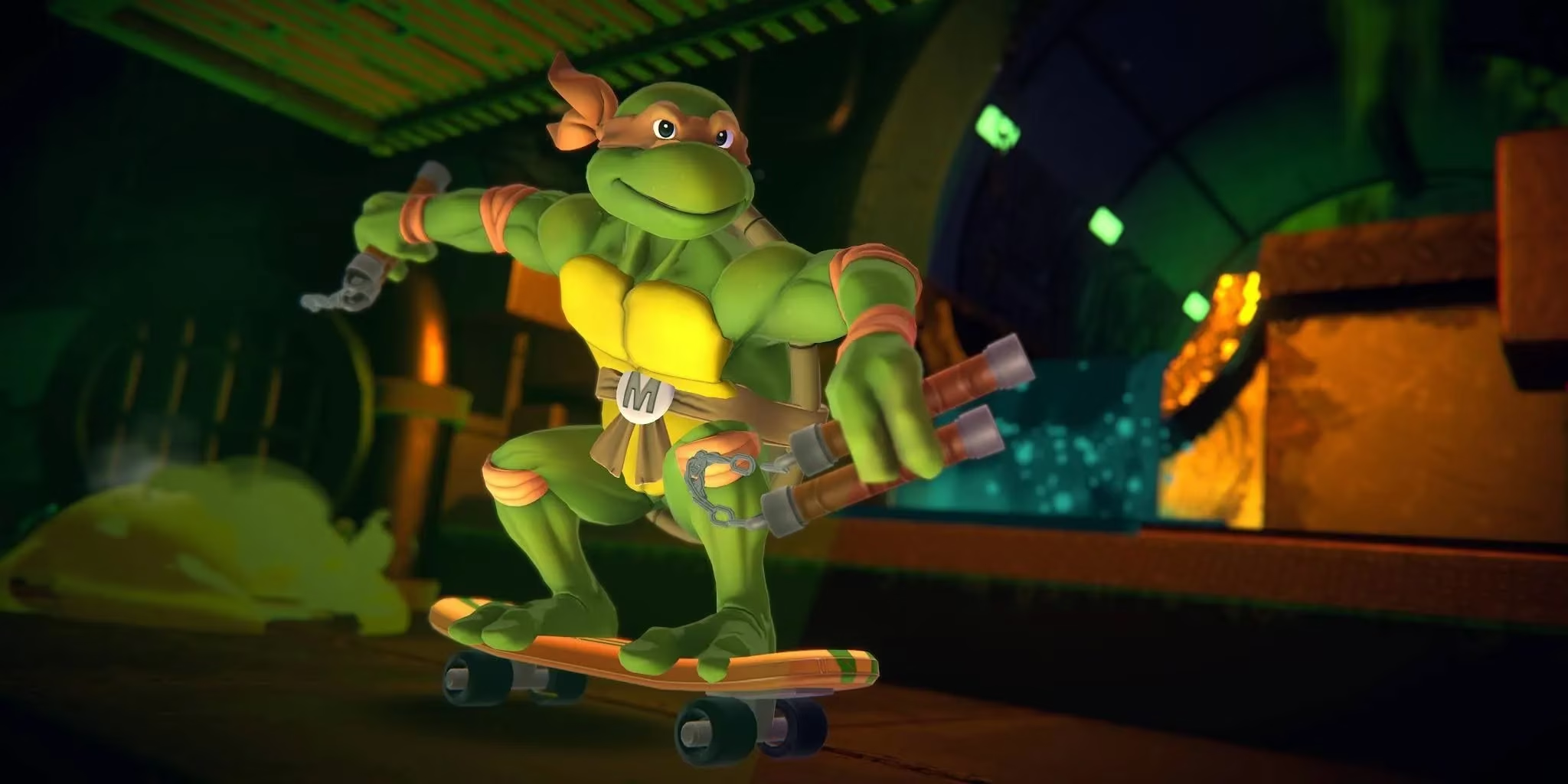
Reflecting on the competitive scene from my perspective as a player, the early days of Nickelodeon All-Star Brawl were defined by a single, pizza-loving ninja turtle. I remember the buzz when the game launched; it felt like a fresh, vibrant take on the platform fighter genre, successfully capturing the chaotic fun of a Nicktoons crossover where SpongeBob SquarePants could square off against Aang from Avatar: The Last Airbender. However, the initial competitive integrity was almost immediately challenged by one character: Michelangelo. His presence was so dominant that tournament organizers, including those at the prestigious Super Smash Con, made the unprecedented decision to ban him outright to preserve fair play. This move, controversial at the time, became a defining moment in the game's esports evolution, highlighting the delicate dance between character identity and competitive balance.
The Heart of the Problem: An Unbreakable Combo
The core issue, as tournament director Michael Brancato elucidated, wasn't just that Michelangelo was strong—it was that he possessed a specific, game-breaking sequence. From my own experience in the lab and in early online matches, encountering this combo was a lesson in frustration. It was an inescapable chain of attacks that, once initiated by a skilled Michelangelo player, led to a guaranteed knockout. This violated a fundamental principle of the fighting game community: the concept of player agency and the ability to escape or counter. While his other moves, like a special that could stall matches, were annoying, they weren't the primary culprit. The ban was a surgical strike against this one unbalanced, deterministic tactic that removed the interactive soul of a match.
The Philosophy of Fair Play in Platform Fighters
This incident underscored a crucial tenet for competitive games in 2026: meticulous mechanical design is paramount. A title like Nickelodeon All-Star Brawl, which draws clear inspiration from the Super Smash Bros. legacy, lives or dies by its equilibrium. When I enter a tournament, I need to believe that my victory or defeat hinges on my skill, my decision-making, and my reflexes—not on my opponent selecting a character with an unfair advantage. Super Smash Con's decision, while disappointing for Michelangelo mains, was a necessary declaration that the integrity of competition supersedes all. It sent a clear message to the developing studio, Ludosity, and the broader community that for a game to have a lasting competitive scene, every fighter must operate within a shared framework of rules and possibilities.
The Path to Redemption: Patches and Evolution
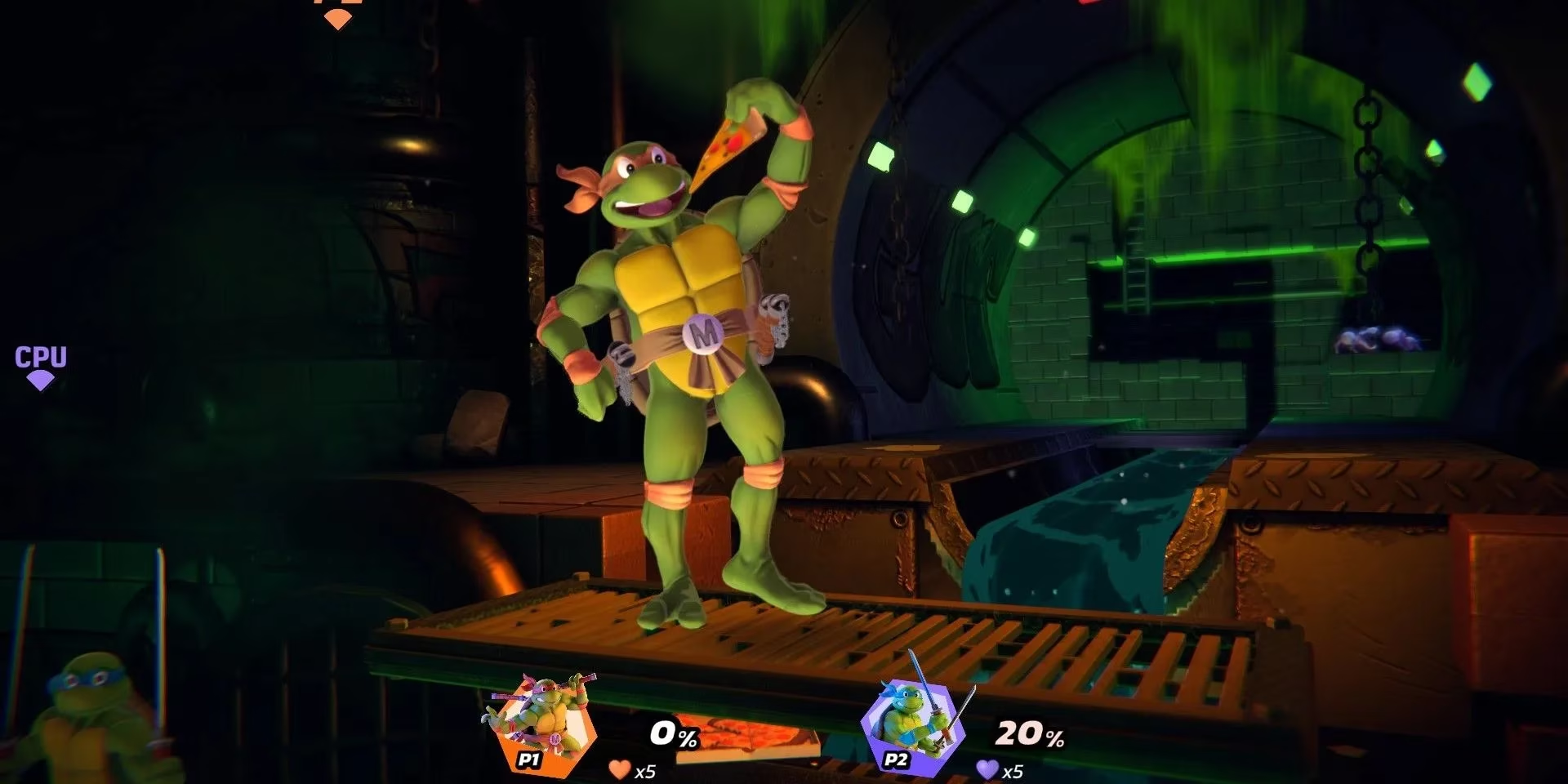
Thankfully, the story didn't end with a permanent ban. The developers' commitment to post-launch support, which they had hinted at with talks of potential third-party DLC characters, proved to be the game's saving grace. Over a series of patches and balance updates throughout 2022 and 2023, Michelangelo received significant adjustments. The infamous unbreakable combo was restructured, his frame data was tweaked, and his overall kit was brought in line with the rest of the vibrant roster. I vividly recall the patch notes that finally reinstated him for competitive play; it was a moment of vindication for the developers' ongoing dedication. By 2024, Michelangelo had transformed from a banned menace into a viable, balanced, and popular tournament pick, his playful personality no longer overshadowed by broken mechanics.
Legacy and Lessons for the Current Meta (2026)
Looking at the game's state in 2026, the Michelangelo saga is now a celebrated case study in live-service game management. The initial ban was a bold, stabilizing action, and the subsequent balancing was a masterclass in responsive development. It established a pattern of trust between the players and the creators. When new fighters are introduced or when subtle meta shifts occur, we have confidence that issues will be addressed. The roster today is remarkably diverse and balanced, with characters from Ren & Stimpy to Danny Phantom all having their moment in the competitive sun. The game's continued presence at events like Super Smash Con is a testament to that hard-won stability.
Key Takeaways from the Michelangelo Era:
-
🚫 Immediate Action is Crucial: Proactive bans for health of competition can be more beneficial than waiting for a fix.
-
⚙️ Balance is a Process, Not a State: Continuous tuning based on community feedback and tournament data is essential.
-
🎮 Player Adaptation is Key: The ban forced players to deepen their roster knowledge, making the overall player base more skilled and versatile.
-
🤝 Communication Builds Community: Transparency from both organizers and developers throughout the process fostered greater understanding and respect.
In the end, my journey with Nickelodeon All-Star Brawl has been shaped by this very episode. It taught me that a game's longevity isn't just about its iconic characters or flashy crossovers, but about the developers' and community's shared commitment to a fair and evolving battlefield. Michelangelo's journey from banned outlier to balanced contender mirrors the game's own path to becoming a respected staple in the platform fighter pantheon. Now, when I pick up the nunchucks, it's with the satisfaction of knowing I'm winning through skill, not exploiting a flaw—and that's the most radical victory of all.