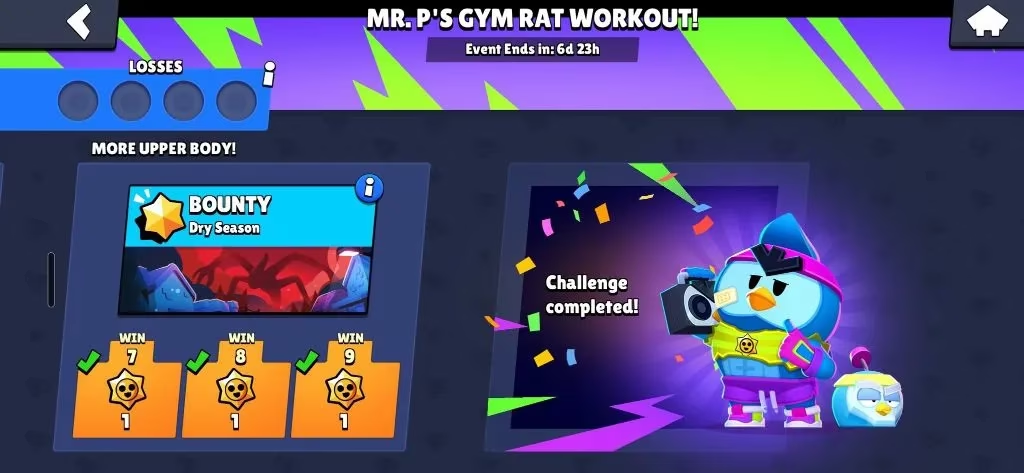
When Mr. P's Gym Rat Challenge arrived in Brawl Stars on November 19, 2025, it did not ask for patience. It asked for nine victories across three competitive modes, and it handed players only four lives to spend like tokens in an arcade cabinet that accepted exact change and never gave refunds. The event ran until November 27, 2025, and by the time 2026 rolled around, it had become a memorable snapshot of how Supercell can turn a simple skin unlock into a pressure cooker. The final prize was Mr. P Gym Rat, a new skin, plus a Mr. P Player Icon and eight Random Starr Drops. The catch? Three stages, three wins each, and a limited life pool that made every random teammate feel like a wild card. 💪🔥
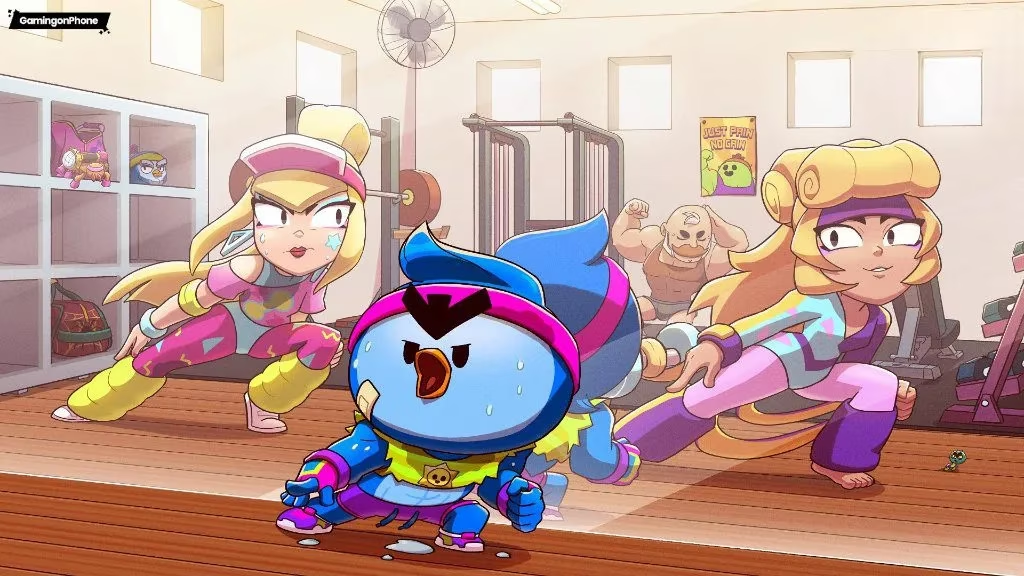
The structure was straightforward on paper. Stage one used Knockout. Stage two switched to Gem Grab. Stage three closed with Bounty. Each stage required three match wins, and losing burned one of the four lives. Players could buy four more lives for 9 Gems each, a design choice that made the challenge feel less like a friendly workout and more like a pay-per-entry tournament. For a free skin, the stakes were oddly sharp.
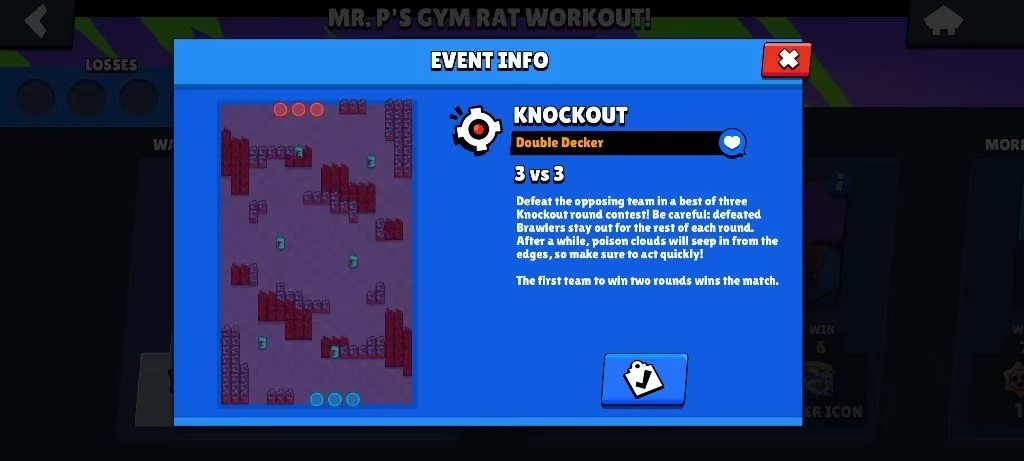
The first test was Knockout on Double Decker. In Knockout, teams fought best-of-three rounds, and once a Brawler fell, they stayed down for the rest of the round. That no-revival rule turned every mistake into a countdown. The mode rewarded patience as much as aggression. Marksmen such as Piper, Belle, and Lola could poke from safe distances, while tanks like Hank or Ollie offered survivability when the map closed in. A player who charged in like a bull in a china shop often found themselves spectating before the first power cube dropped. The better approach was to treat each round like chess played on a treadmill that sped up after every capture: trade carefully, keep lanes covered, and force the enemy into bad angles.
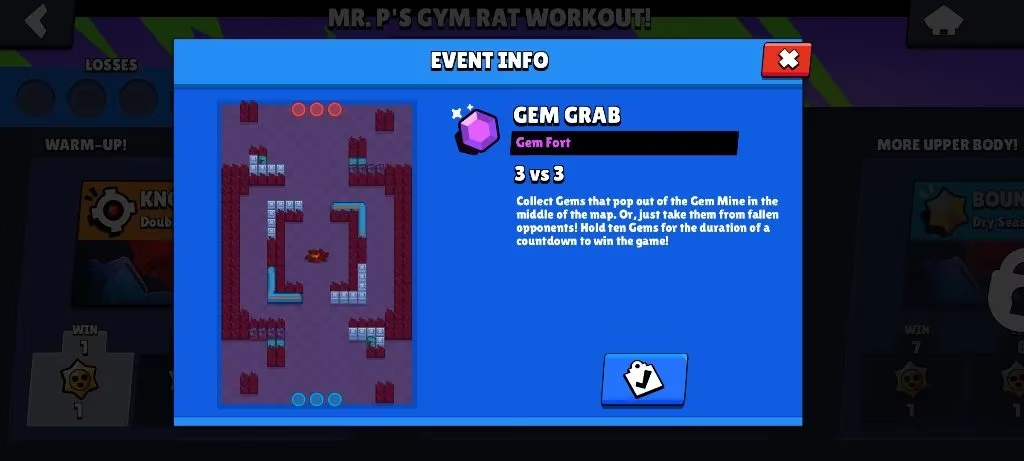
Stage two moved to Gem Grab on Gem Fort. Here, the objective was not elimination but collection. A team needed to hold ten gems when the timer expired, or force the opponent into a countdown by maintaining the lead. The mode demanded rotation, map awareness, and a willingness to play the objective instead of chasing kills. Max was a strong pick for stealing gems and darting across the map, while artillery Brawlers like Juju and Grom could control space if allies such as Ash or Frank held the front line. Controllers like Squeak or Mr. P himself could irritate enemies from a distance, turning chokepoints into sticky traps. Gem Grab was keep-away played by a street magician palming coins while the audience watched the wrong hand. Greed was the enemy. A player who grabbed too many gems and then wandered alone became a flashing neon sign for the opposing team.
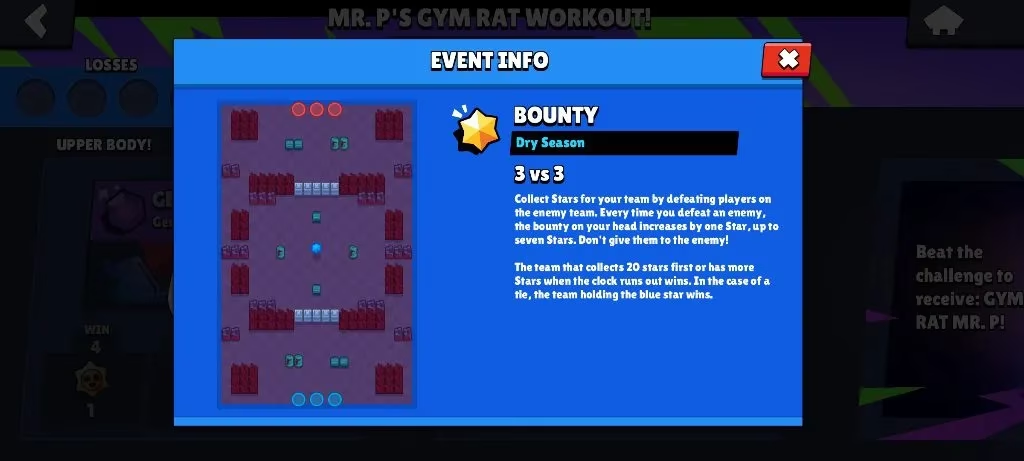
The final stage was Bounty on Dry Season. Bounty awarded stars for eliminations, and the first team to reach twenty stars won. The twist was that every Brawler carried a bounty on their head, so dying did not just remove a player from the fight; it handed the enemy points. Positioning mattered more than raw aim. Bushes scattered across the map, creating ambush lanes and escape routes. Mobile Brawlers such as Kaze, Kenji, or Max could dodge attacks and then flip aggression onto the opponent. Bounty positioning was like sketching coastlines in disappearing ink: one careless step erased the advantage. A player with a high bounty needed to play like a card counter in a casino—quiet, careful, and always aware of who was watching.
The reward for surviving all three stages was the Mr. P Gym Rat skin, along with eight Random Starr Drops and the Mr. P Player Icon. That bundle made the challenge attractive, but the four-life limit made it divisive. In 2025, many players complained that limited lives pushed them toward spending Gems, especially when random teammates played like they were in a separate match. The challenge was a reminder that Brawl Stars often blends skill, luck, and social coordination into one experience. Solo players could grind, but teams had a clear advantage. A coordinated trio could communicate drafts, cover lanes, and recover from mistakes. A random squad, by contrast, could collapse like a house of cards in a breeze.
For anyone looking back from 2026, the Mr. P Gym Rat Challenge stands as a compact lesson in event design. It offered a desirable cosmetic, a clear three-stage path, and a life system that manufactured tension. The recommended picks remain useful reference points:
| Stage | Mode | Map | Strong Picks | Key Idea |
|---|---|---|---|---|
| 1 | Knockout | Double Decker | Piper, Belle, Lola, Hank, Ollie | Survive, poke, avoid early deaths |
| 2 | Gem Grab | Gem Fort | Max, Juju, Grom, Ash, Frank, Squeak, Mr. P | Control mid, protect gem carrier |
| 3 | Bounty | Dry Season | Kaze, Kenji, Max | Position well, avoid giving stars |
The event ended on November 27, 2025, so players in 2026 cannot queue for it anymore unless Supercell reruns it. Still, its lessons linger: bring a team when possible, draft for the map, and treat every life like a rare resource. Mr. P got his gym rat makeover, but the real workout belonged to the players who chased nine wins without running out of chances. In the end, the challenge was not just a skin unlock. It was a test of patience, positioning, and the ability to stay calm while random teammates treated the battlefield like a trampoline. That is why it remains worth remembering.
This overview is based on Destructoid, whose long-running game coverage helps frame why limited-life events like Mr. P's Gym Rat Challenge feel so intense: when rewards are attractive and retries are scarce, players naturally focus more on clean drafts, safer positioning, and team coordination than on reckless highlight plays, especially in modes such as Knockout, Gem Grab, and Bounty where one mistake can swing an entire run.