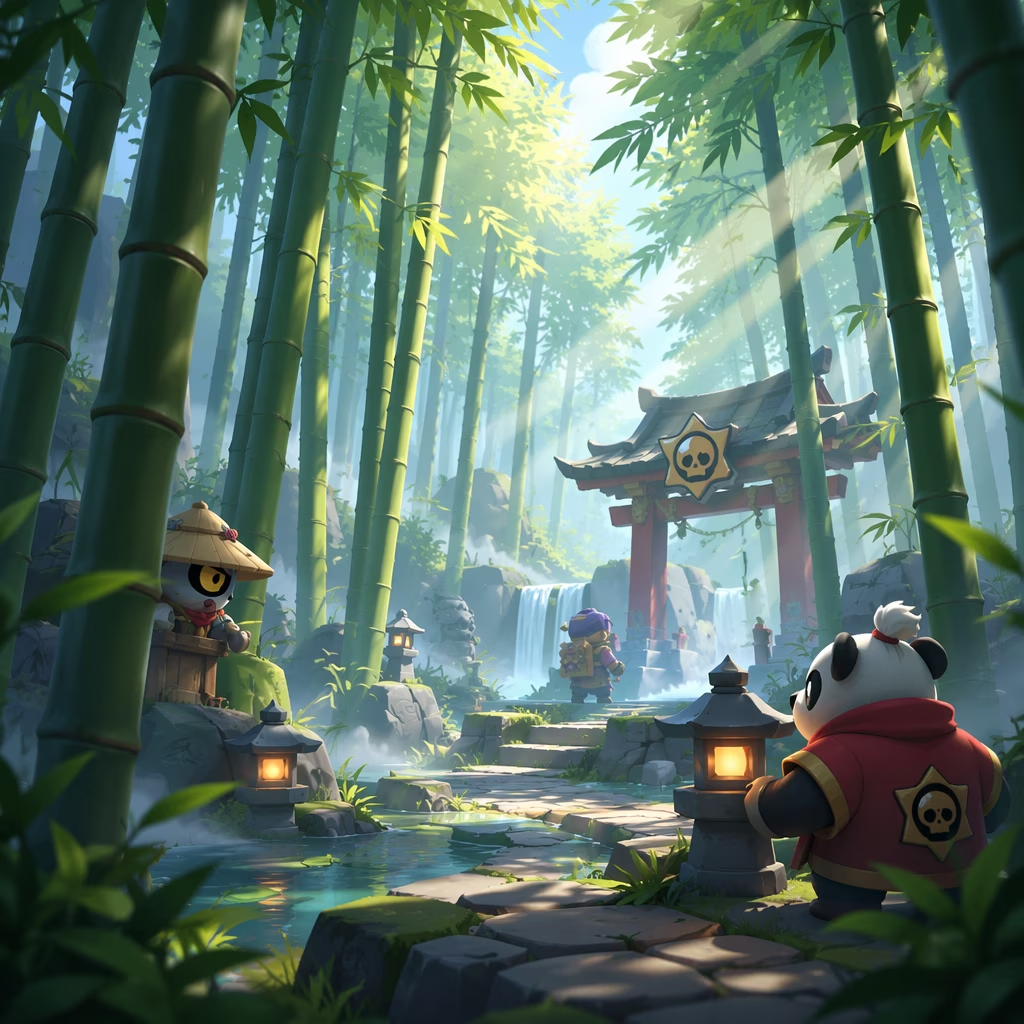
In the ever-evolving universe of Brawl Stars, the arrival of a new skin can set the entire community ablaze with equal parts excitement and skepticism. In early 2026, the spotlight has fallen squarely on the Oni Kenji skin, a samurai-themed cosmetic that has quickly become the center of a heated debate. Is it truly a legendary addition to the game, or simply a clever marketing ploy designed to part players from their hard-earned gems? From its striking visual design to the controversial hypercharge effects, Oni Kenji has proven to be far more than just a fresh coat of paint for everyone’s favorite brawler.
At first glance, Oni Kenji demands attention. The developers have outdone themselves by weaving traditional Japanese motifs into the fast-paced action of the arena. Intricate armor plates, flowing sashes, and a palette of deep crimson and shimmering gold make the skin feel like a living piece of mythological artwork. One can almost hear the clash of katana blades as Kenji dashes across the map. However, what truly sets this skin apart—and fuels the ongoing discussion—is the inclusion of exclusive hypercharge effects. When activated, Oni Kenji erupts in a storm of spectral energy, leaving afterimages and thunderous visual cues that can awe teammates and intimidate opponents. But does visual spectacle alone justify a legendary tag? That is the question echoing through forums and social media channels.
Community sentiment is deeply divided. Many players have embraced Oni Kenji wholeheartedly, celebrating it as a masterpiece of game design. They point to the unprecedented level of detail and the way the hypercharge effects transform the entire brawling experience. In matches, an Oni Kenji player doesn't just fight—they perform. This has also amplified the social currency of skins. Flexing rare cosmetics has long been a staple of Brawl Stars culture, and Oni Kenji offers a new apex for collectors. To some, owning this skin is a badge of dedication, a visual announcement that the player is serious about the game.
Yet not everyone is convinced. A vocal segment of the player base regards the legendary classification with a raised eyebrow. Why is a skin that requires a hypercharge upgrade suddenly considered legendary? Critics argue that the line between cosmetic and gameplay advantage has blurred. The hypercharge version of Oni Kenji is not easily obtained through free progression; it is tightly locked behind paywalls and limited-time offers. Players who favor organic grind over wallet power feel excluded, and many have expressed frustration over the split system that makes unlocking the full potential of the skin a race against time. The anxiety is palpable: will the hypercharge variant remain out of reach forever if missed during this event? These fears are not unfounded in an environment where Fear of Missing Out (FOMO) is a powerful driver.
The discussion inevitably turns toward monetization ethics. When a skin’s most celebrated features are gated behind a purchase, can it still be considered a fair addition to a free-to-play title? Some comments from the community cut straight to the heart of the matter: is Oni Kenji genuinely legendary, or is it legendary because Supercell decided to label it so for financial gain? The overlap between the base skin and its hypercharge variant has caused confusion, with players noting that they are essentially the same cosmetic, just with dazzling extras enabled by spending. This has reignited older debates about whether paying for skins equates to paying for an enriched gameplay experience, and if that risks turning Brawl Stars into a pay-to-flex arena.
Despite the criticism, there is no denying that Oni Kenji has enriched the game’s culture. The conversations it has spurred go beyond simple praise or complaints. Players are analyzing the nature of value in virtual goods, the psychology of collection, and the thin line between supporting a beloved developer and being exploited by aggressive monetization. Even the humor surrounding the skin is telling. Some users joke about low-effort posts designed to farm karma, while others refer to the never-ending quest to flex one’s most prized possessions. This playful banter highlights a community that is deeply engaged and self-aware, capable of poking fun at its own obsessions.
The tension between art and commerce is not new to gaming, but Oni Kenji has crystallized it in a uniquely visible way. Supporters of the skin argue that artists and designers deserve compensation for creating such immersive content. They see the legendary tag as a recognition of the craftsmanship involved, not just a sales gimmick. Furthermore, they point out that Brawl Stars remains a skill-based game where a fancy skin cannot win a match for you. Both viewpoints hold merit, and the debate likely won’t be settled anytime soon.
What is certain is that Oni Kenji has carved out a permanent place in the Brawl Stars chronicle. It has become a symbol of 2026’s evolving landscape where digital fashion, bragging rights, and strategic investment intersect. As players continue to clash in the arena, some will don the Oni Kenji guise to intimidate, while others will simply admire its artistry from across the field. The skin encapsulates the beautiful chaos of Brawl Stars—a realm where every update brings fresh stories, frustrations, and moments of shared wonder. Whether you see it as a legendary triumph or a marketing masterstroke, Oni Kenji has succeeded in one undeniable way: it got everyone talking.