As a dedicated platform fighter enthusiast and someone who grew up during Nickelodeon's golden age, the announcement of Nickelodeon All-Star Brawl initially sparked excitement. The roster reads like a '90s and '00s nostalgia trip: Rugrats, The Wild Thornberrys, Ren & Stimpy, Catdog, Hey Arnold, Aaahh!!! Real Monsters, Avatar, Invader Zim, SpongeBob SquarePants, and Danny Phantom. These characters defined childhoods. Yet, despite developer Ludosity's proven skill with action platformers and the game's competent mechanical foundation as a Super Smash Bros.-inspired fighter, a fundamental element feels profoundly missing. The complete absence of voice acting creates an experience that is not just lacking, but strangely unsettling. If Nigel Thornberry doesn't exclaim "Smashing!" during a powerful attack, is he truly Nigel Thornberry?
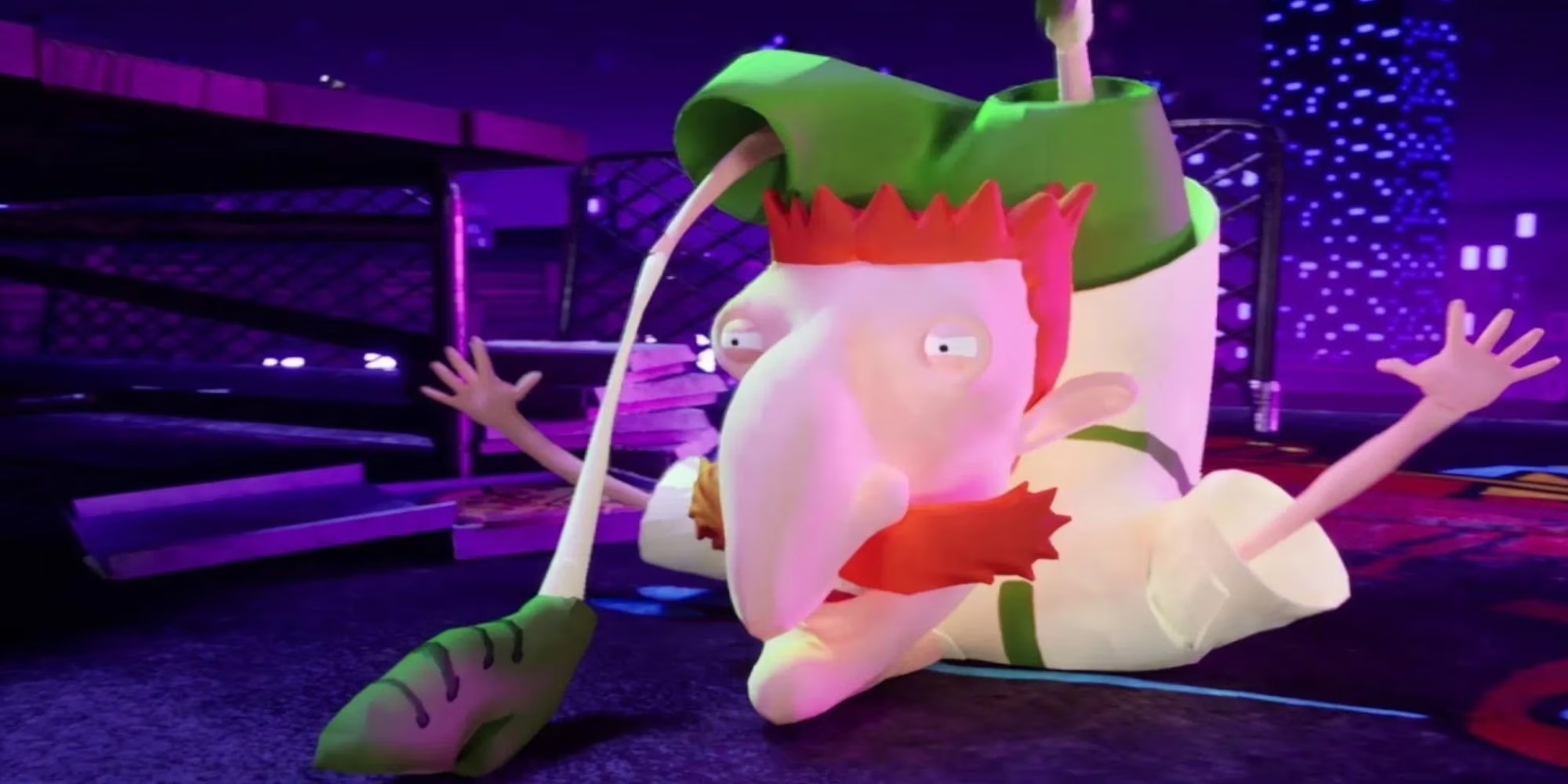
The question extends beyond a single catchphrase into the very ontology of these beloved icons. What fundamentally constitutes SpongeBob SquarePants? Is it merely his rectangular, porous silhouette and khaki shorts? Or is it the inseparable combination of his visual design, his machine-gun laugh, his boundless optimism, and Tom Kenny's iconic vocal performance? A character is more than their hitbox and move-set animations. Ludosity's designers have clearly worked to inject personality through fighting styles and taunts—Reptar's lumbering ferocity, Zim's chaotic gadgetry—but these efforts fight against a pervasive silence. The game presents a roster of meticulously crafted shells, familiar in shape but hollow in substance. They move, they attack, but they do not speak, laugh, or growl. The effect is less a celebration and more an uncanny replication, akin to Invasion of the Body Snatchers or encountering a sleepwalking somnambulist wearing a friend's face.
This silence manifests practically in matches devoid of character. Beyond the announcer and background music, the audio landscape is dominated by generic, context-less sound effects:
-
Slapping sounds for physical strikes
-
Slide whistles for certain movements
-
The whip of a tail
-
Metallic clinks from Zim's mechanical limbs
You will never hear Aang's focused grunt as he bends the elements, Reptar's earth-shaking roar, or the Ninja Turtles' surfer-dude banter. This auditory vacuum strips away layers of identity that players have known for decades. The contrast with the genre's gold standard, the Super Smash Bros. series, is stark and inevitable. In Smash, every character is brought to life through a symphony of voice clips. Sora's triumphant "Take this!" during a Sonic Blade or his defensive "Back off!" during an Aerial Sweep immediately connect the pixelated fighter to his Kingdom Hearts legacy. These vocalizations are not mere flourishes; they are essential threads in the fabric of the character's identity. Their absence in All-Star Brawl creates a disconnect that mechanical polish alone cannot bridge.
Of course, comparing a Nickelodeon-licensed title to Nintendo's decades-spanning crossover juggernaut isn't entirely fair regarding budget or scope. However, by positioning itself so directly as a Smash-inspired alternative, All-Star Brawl invites these comparisons, especially on elements core to the fan-service experience. The silence isn't just a missed opportunity for authenticity; it actively undermines the game's primary appeal: playing as these specific, beloved characters. A mute SpongeBob is an ontological contradiction—the character who literally never stops talking is rendered completely silent. It breeds suspicion toward this doppelganger on the screen.
| Character | Defining Vocal Trait | Effect of Silence in All-Star Brawl |
|---|---|---|
| Nigel Thornberry | "Smashing!" exclamation | Core catchphrase absent; character feels incomplete. |
| SpongeBob | Hyperactive laugh & speech | Contradicts his core personality; feels wrong. |
| Invader Zim | Maniacal, high-pitched cackle | Loses his menacing, unhinged charm. |
| Danny Phantom | Heroic quips & ghostly wails | Reduces his cool factor to mere visual effects. |
The community's response highlighted this need. Shortly after the game's 2021 release, modders quickly took matters into their own hands, creating and sharing voice packs that spliced in audio from the original shows. This fan-driven solution was met with widespread approval, with many players reporting that even these unofficial additions "made a real difference," transforming the feel of the game from a hollow shell to a more authentic celebration. It proved the point: these voices are not optional extras; they are integral components of the characters' souls. By 2026, the lesson from All-Star Brawl's launch remains clear for any licensed crossover fighter. Technical gameplay is paramount, but for a game built on nostalgia and iconic personalities, authentic audio representation is equally critical. It's the difference between battling with cherished childhood friends and fighting alongside their eerily silent replicants. For many, the wait for official voice support was a bridge too far, making the game feel like a promise only partially kept.